




Isle of Wight Holiday Homes with Outdoor Space to Enjoy
Introduction
An outdoor space changes the character of a holiday in ways that are difficult to articulate until you are sitting in one. It is not simply additional square footage. It is where the day begins — coffee before anyone else is awake, the garden still quiet, the light coming in low across the water. It is where the day ends, too, the point at which a group naturally gathers without any particular reason to.
On the Isle of Wight, that quality is amplified. The island’s light has a particular clarity to it, especially near the coast, and the proximity of the sea means that even a private garden feels connected to something larger. The best outdoor spaces here do not compete with the landscape. They frame it.
Key Highlights
- Some homes in the collection include private facilities: a swimming pool, sauna, or tennis court, set within gardens designed to be used, not just admired.
- Outdoor spaces on the Isle of Wight extend well beyond the garden boundary, with coastal paths, beaches, and open countryside often accessible directly from the door.
- The most considered properties treat outdoor space as part of the architecture — planned for aspect, privacy, shelter, and the way light moves through the day.
- Privacy is not incidental in a well-designed holiday home. It is the result of deliberate choices about orientation, planting, and how the space sits within the landscape.
- The island’s coastline, designated areas of outstanding natural beauty, and particular quality of light make the setting itself part of the stay.
- Many homes are designed with groups and families in mind — generous outdoor spaces that make gathering easy and unhurried
The Role of Outdoor Space in Isle of Wight Holiday Homes
The best outdoor spaces are not afterthoughts. They are considered from the outset — given the same attention as any room inside the house, and planned for how they will actually be used across the course of a day. Where the morning light falls. Where the afternoon sun settles. Where people naturally end up when the evening comes in.
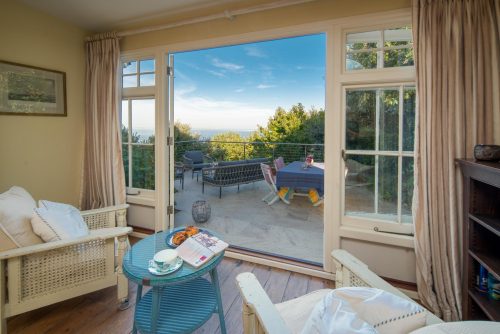
What separates a genuinely well-designed outdoor space from one that simply exists is the relationship between inside and out. The flow between the two should feel easy and unforced: a kitchen that opens directly onto a terrace, a sitting room with doors that disappear into the wall. On the Isle of Wight, where the landscape does a great deal of the work, the best properties are those that meet it rather than turn away from it.
How Considered Design Enhances Your Stay
There is a meaningful difference between an outdoor space that has been designed and one that has simply been finished. The former thinks about sun trajectory, sightlines, and the balance between spaces for gathering and spaces for solitude. The latter gives you paving and a table and leaves you to make the best of it.
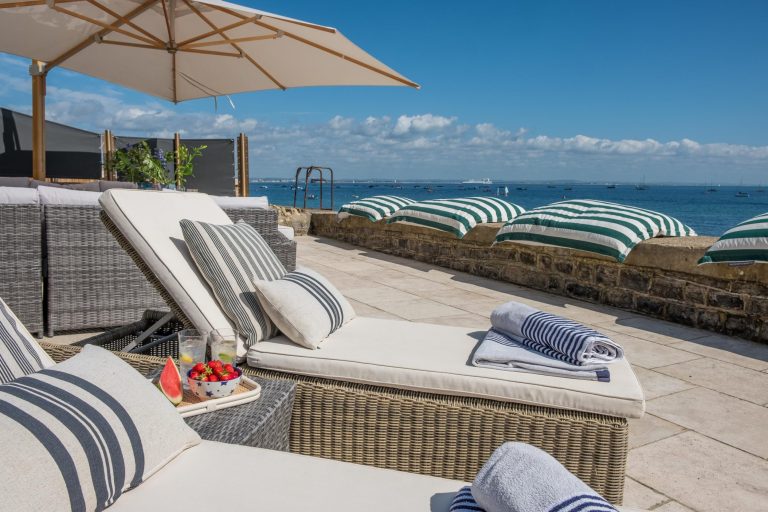
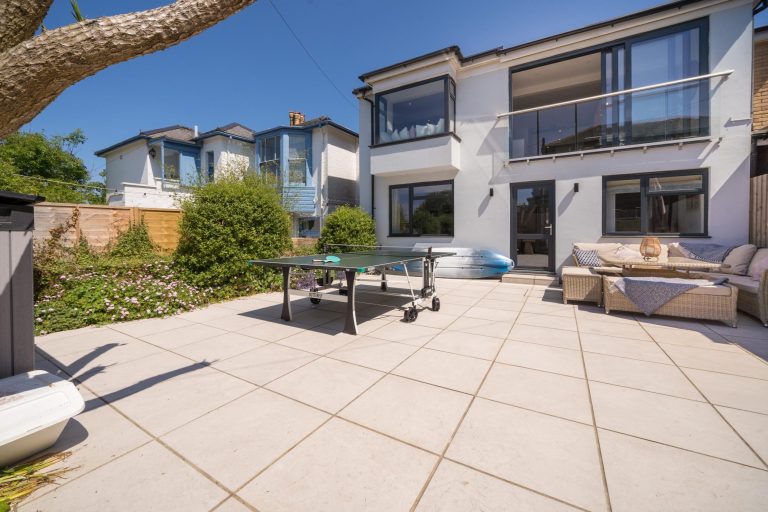
A terrace is not just a flat surface outside the back door. Its value lies in where it sits within the property, how it handles the prevailing wind, what it looks out over, and whether the furniture invites you to stay rather than simply provides somewhere to put a cup down. These are not decorative considerations. They are what separate a design-led holiday home from one that goes largely unused.
Blurring the Line Between Indoors and Outdoors
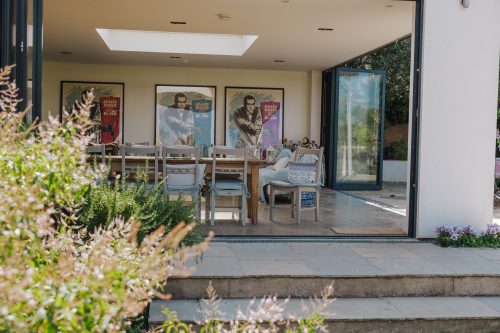
The homes that handle this best make the transition between inside and outside feel almost incidental. Full-width glazing that folds back entirely, stone floors that continue from kitchen to terrace without interruption, timber detailing that appears on both sides of the threshold: these are the details that dissolve the boundary rather than simply bridging it.
The effect is worth more than it might sound. When the inside and outside of a house feel genuinely connected, you stop thinking of the garden as somewhere you go and start treating it as somewhere you are. Cooking, eating, reading, doing nothing in particular: all of it happens in relation to the landscape rather than alongside it. On an island where the light and the proximity of the sea are part of what you came for, that connection is not incidental. It is the point.
Saunas, Swimming Pools and Sport, Private Facilities Worth Seeking Out
Beyond the terrace and garden, certain private facilities have the capacity to shape the entire rhythm of a stay. Not as additions bolted on to justify a higher nightly rate, but as spaces that genuinely change how the days unfold: what time you get up, how you move through the afternoon, where the group ends up in the evening.
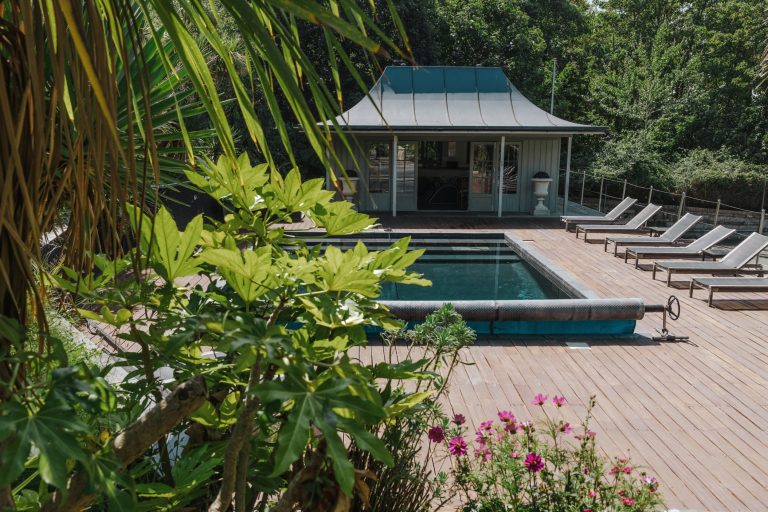
A private swimming pool shifts the centre of gravity of a holiday. A sauna introduces a ritual that most guests find themselves returning to more than they expected. A tennis court gives a group of any age something to organise themselves around, without having to go anywhere to do it. These are not amenities to be listed. They are reasons a particular property stays with you after you leave.
Hot tub properties are something we are actively bringing into the collection — if that is a priority for your stay, joining our mailing list is the best way to hear first.
Tennis Courts and Active Outdoor Space
A private tennis court changes the dynamic of a group stay in a way that is difficult to replicate with any other outdoor feature. It gives people something to organise themselves around: a morning match before the beach, a competitive afternoon that runs longer than anyone planned, an easy way for a multigenerational group to be active together without having to go anywhere to do it.
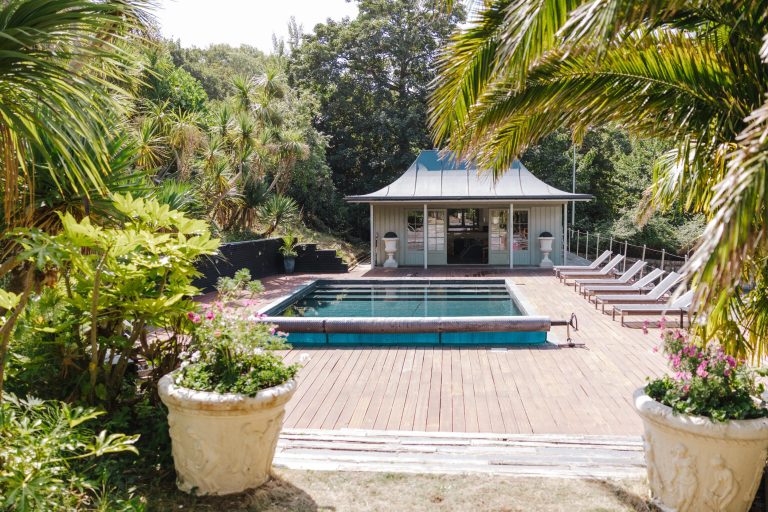
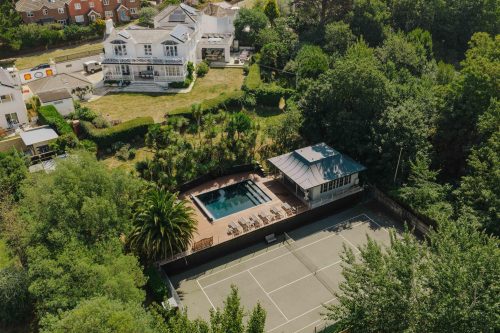
At Shorelands, the tennis court sits alongside the pool within a property that has been designed for exactly this kind of stay. One where the outdoor space is as considered as anything inside. The combination is rare in a self-catering setting on the island, and it shows in how the days tend to unfold there.

Sauna Rituals and the Rhythm of Island Breaks
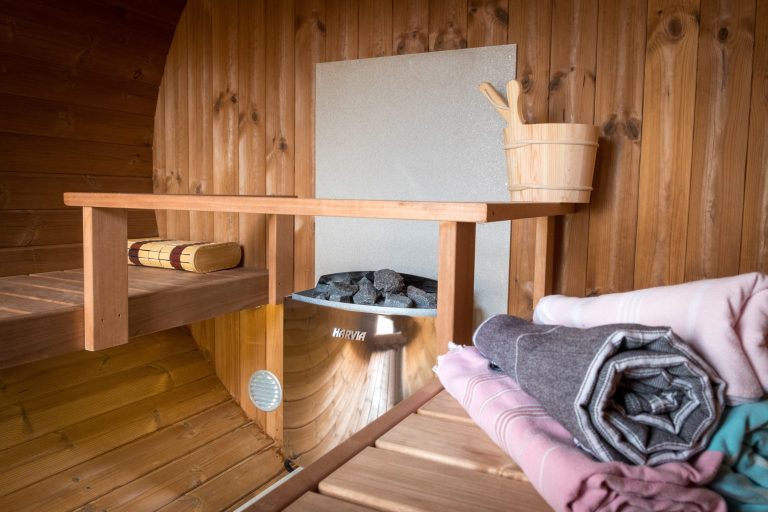
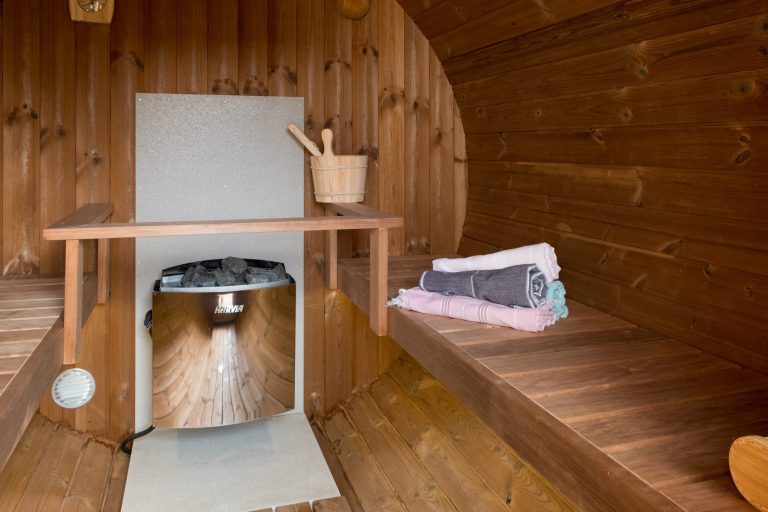
A sauna does something that most holiday amenities do not. It introduces a rhythm. Not the rhythm of itineraries or tide times, but a quieter one. The decision to use it early, before a coastal walk, or late, when the day has wound down, becomes one of the small rituals that accumulates into a particular kind of stay.
Used in the morning, it sharpens the start of a day in a way that feels earned rather than rushed. After a long walk along the island’s coastal paths, the heat does the work that nothing else quite replicates. In the evening, it offers a transition: a deliberate pause between the activity of the day and the stillness of the night. At The Beach House, the sauna sits within a property that understands this instinctively. It is there to be used, not admired. On an island where slowing down is rather the point, it fits naturally into that intention.
For those staying without a private sauna, Slomo Saunas operate a number of public sessions across the island — including in Bembridge, making them particularly well placed for guests staying on the eastern coast.
What Makes a swimming pool Holiday Setting Special
An outdoor swimming pool is about more than the water. What makes one genuinely memorable is almost always the setting: the view it looks out over, the quality of light at different points in the day, and how the space around it has been designed for the hours you spend not swimming.
At Shorelands, the pool sits within a property that already has one of the more considered outdoor spaces in the collection. The setting does the work that a pool in a less particular location simply cannot. It is the kind of space where you find yourself staying longer than planned, not because there is nothing else to do, but because leaving feels like the wrong decision.
That quality — a pool that feels like a natural part of the property rather than an amenity dropped into it — is what separates the ones worth seeking out from those that merely appear in the filters.
Terraces, Verandas, and Thoughtful Garden Spaces
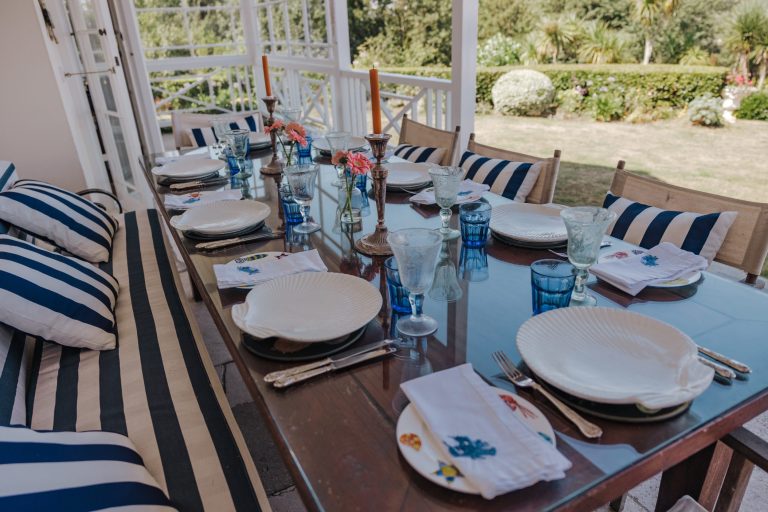
A terrace or veranda can become the organising principle of a holiday: the place breakfast happens, where the afternoon drifts, where the group ends up without anyone suggesting it. That kind of gravitational pull does not happen by accident. It is the result of a space that has been positioned, proportioned, and furnished with enough care that it earns repeated use across the day.
The difference between a terrace that works and one that does not is rarely about size. It is about aspect: which way it faces, when the sun reaches it, how it handles wind coming off the water. A well-placed veranda on the Isle of Wight, oriented to hold the evening light or positioned to frame a particular view across the coastline, offers something that no amount of interior design can replicate.
Why Placement, Aspect, and Shelter Matter
Aspect is the first decision and the one that determines almost everything else. A west-facing terrace holds the evening light and earns its place as the natural end point of the day. An east-facing one catches the morning before the rest of the house is awake. Neither is better in absolute terms. What matters is whether the placement has been considered at all, and whether it serves the way the space will actually be used.
Shelter is the consideration that most often gets underestimated, particularly near the coast. A low wall, a run of well-established planting, or a glass screen can transform a terrace from somewhere you visit briefly into somewhere you stay. The key is doing it without closing off the view — which is where the better-designed properties distinguish themselves. Privacy and openness are not opposites. Handled well, they exist in the same space.
The Subtle Difference of a Self-Catering Isle of Wight Holiday Let with Terrace
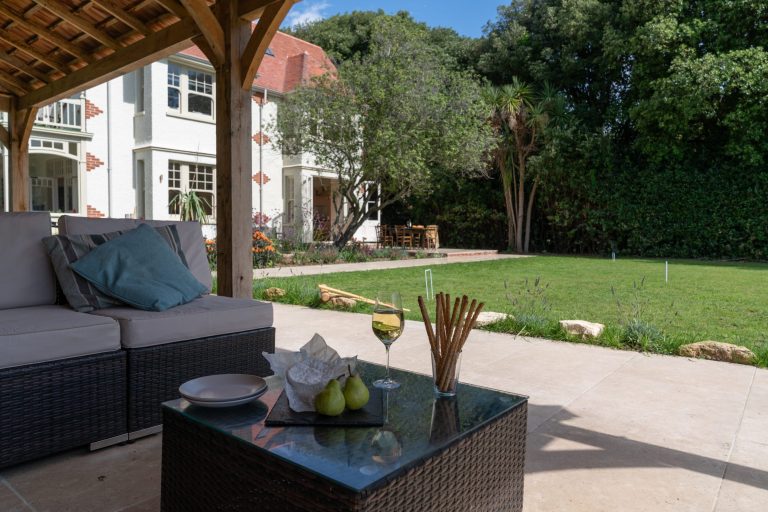
The distinction shows itself in the details. A terrace that has been designed for daily use — rather than photographed for a listing — sits close enough to the kitchen that carrying food out is not a second thought. It has lighting that makes staying on into the evening feel natural rather than effortful. The furniture is weighted and comfortable enough that nobody moves inside earlier than they need to.
These are not grand gestures. They are the accumulation of small, considered decisions that separate a terrace you return to throughout the day from one you use once and forget. In a self-catering property, where the rhythm of a stay is entirely your own, that difference matters more than it might elsewhere.
The Value of Privacy in Outdoor Living
Privacy in an outdoor space is key when you want to relax. When you are on holiday, you want to get away from the feeling that people are watching you. You need this time to feel free and let go. If your garden or terrace does not offer privacy, it can be hard to feel calm.
That is why privacy matters so much for a hidden getaway. The right space lets you use your outdoor area without worry. Many well-planned homes use plants, the way the house faces, and design details to give you quiet spots and hidden places. This helps you feel that your outside time is really just for you.
Design Solutions for Secluded Island Retreats
Privacy in a holiday home is rarely achieved by a single decision. It is the result of several considered choices working together: how the property sits within its plot, which way it faces, and how the garden has been structured around the spaces people actually use.
Orientation is the most fundamental of these. A property that faces open countryside or looks out to sea rather than towards neighbouring buildings has an inherent sense of seclusion that no amount of planting can replicate after the fact. Where that is not possible, layered planting — hedges, trees, and softer understorey — can establish a boundary that feels like landscape rather than barrier. A sunken terrace, set a level below the main garden, creates enclosure without blocking light or view. A pergola or screen defines a space without closing it entirely, offering the sense of a room outdoors rather than simply a gap between fences.
None of these solutions require the property to feel hemmed in. The best ones make privacy feel like the natural condition of the space — as though the seclusion was always there, waiting to be settled into.
Framed Views and Quiet Corners
The most considered outdoor spaces work by directing attention rather than presenting everything at once. An opening cut into a hedge, a bench angled towards a particular point on the horizon, a garden wall with a deliberate gap: these are the details that give a view its frame and make looking out feel curated rather than accidental.
The same principle applies to how a garden is structured. A large, undivided outdoor space can feel exposed rather than generous. Breaking it into smaller areas — a secluded corner at the end of a path, a spot set apart from the main terrace — gives everyone somewhere to be alone within a shared stay. That quality is worth more than it sounds when you are travelling with a group.
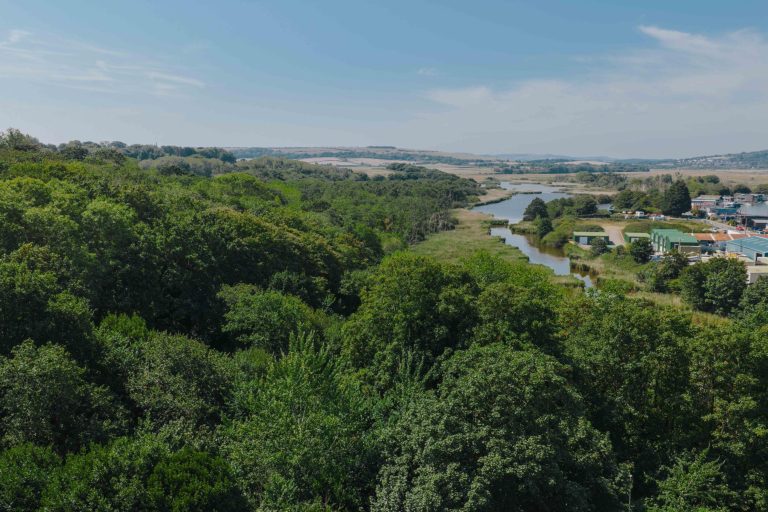
On the Isle of Wight, location does some of this work naturally. Our newest addition above Yaverland sits in that rare position where rural and coastal exist in the same view. The kind of outlook that takes a moment to place. A direct path leads down to one of the island’s most unspoiled stretches of beach, with Sandown Bay opening out ahead and the promenade at Shanklin visible along the coast. It is the sort of place where the framed view from the garden turns out to be only the beginning.
Outdoor Dining, Barbecues, and Coastal Gatherings
Social Rituals: Sharing Food in the Open Air
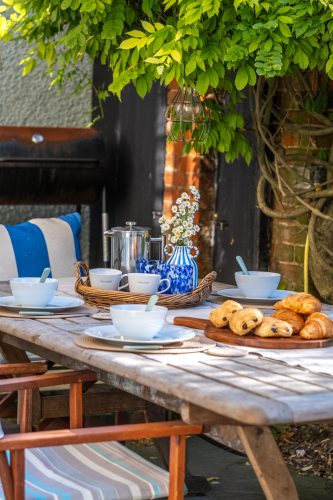
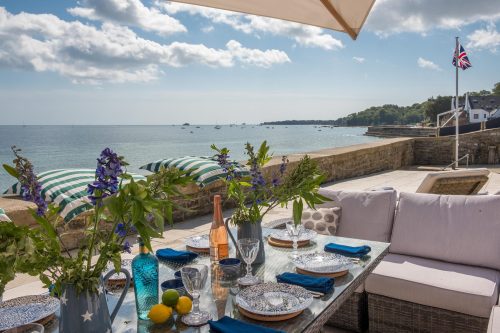
There is something about eating outside that changes the pace of a meal in a way that is difficult to manufacture indoors. Conversations run longer. The food tastes different. Nobody is in a hurry to be anywhere else. On the Isle of Wight, with the sound of the coast nearby and the light shifting across the afternoon, that quality is amplified. The setting does what no amount of interior design can.
The best outdoor dining spaces understand this and are built around it. Not just a table positioned outside the back door, but a space that considers proximity to the kitchen, evening lighting, shelter from the wind, and seating generous enough that nobody feels like an afterthought. When those elements come together, an alfresco meal stops being a practical choice and becomes the reason you remember a particular evening.
Features that Support Memorable Alfresco Meals
The practical details matter more than they might seem. A barbecue that is well-positioned and properly specified — not a rusting afterthought pushed to the side of the terrace — changes what is possible for the week. Lighting that is warm rather than harsh extends the evening without effort. Shelter from the prevailing wind, whether from a pergola, a low wall, or a well-placed run of planting, is what separates a space that gets used on two evenings from one that becomes the default for the entire stay.
Seating is the detail that is most often underestimated. A table large enough to seat the whole group without anyone perching at the corner, with chairs that invite an extra hour rather than quietly suggesting you move inside: these are the things guests notice without always being able to articulate why one property felt more generous than another.
Fire Pits, Hammocks, and Meaningful ‘Pause’ Spaces
Not every outdoor space needs a purpose. Some of the most valuable ones are simply somewhere to be: a hammock slung between two trees that does nothing except suggest you stop, a fire pit a short walk from the house that offers no particular reason to be there other than that the evening is mild and the flames are going.
These are the details that rarely appear at the top of a search filter but tend to be what guests mention when they describe a stay that felt different. The pause spaces. The ones that slow the pace down without asking anything of you.
Slow Moments, Island Light, and Evening Rituals
A fire pit does something that is hard to replicate with any other feature. It creates a reason to stay outside after dark. As the island light drops and the air cools, the fire becomes the natural point around which an evening organises itself. Not because anyone planned it that way, but because warmth and flickering light do what they have always done.
There is no rushing this part of the day. The garden, which earlier might have been the backdrop to lunch or an afternoon in the sun, becomes something different entirely: quieter, more enclosed, more its own place. On the Isle of Wight, where the coastal air carries a particular quality as the evening comes in, that transition from day to night feels worth marking.
Details That Change the Pace of Your Stay
The smaller details are often the ones that shift how a stay actually feels. A hammock does not need justifying. It exists to suggest that stopping is a reasonable thing to do. An armchair positioned to catch the morning sun, a bench set slightly apart from the main terrace with a particular view out to sea: these are not grand design statements. They are quiet invitations.
What they have in common is intentionality. Someone decided that this spot, at this angle, with this outlook, was worth making somewhere to be. That considered quality is what distinguishes a garden that has been thought about from one that has simply been planted and left. On an island where the pace is already slower than most, these details are the ones that help you settle into it properly.
Isle of Wight’s Landscape as an Extension of Your Outdoor Space
The Isle of Wight has a way of making the boundary between a private garden and the wider landscape feel porous. A gate at the end of the garden opens onto a coastal path. A terrace is positioned so the sunset over the water is not something you have to seek out but something that simply happens while you are sitting there. The island does not feel like a backdrop. It feels like it belongs to you for the duration of the stay.
That quality is particular to the island. The combination of coastline, countryside, and the clarity of light that comes with being surrounded by water means that even a modest outdoor space feels larger than its boundaries suggest. The garden ends, but the view does not.
Sea Views, Natural Light, and Coastal Walks from the Door
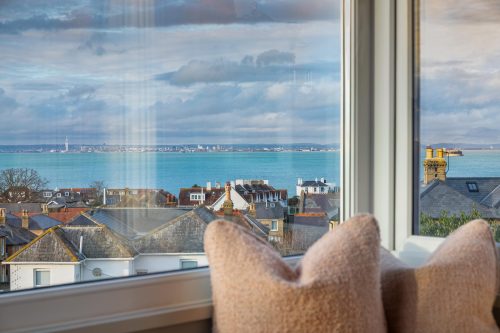
A sea view is not a static thing. It shifts with the weather, the tide, and the time of day — which is part of what makes it worth having in a holiday home rather than simply nice to look at in a photograph. The light on the Isle of Wight has a particular quality that is difficult to attribute to any single cause, though the fact of being surrounded by water almost certainly plays a part. It makes the island feel brighter and more open than its size might suggest.
Direct access to the coastal path network changes the relationship between a property and its surroundings in a way that proximity to the sea alone does not. When the landscape is something you step into rather than something you drive to, it becomes part of the daily rhythm of a stay: a morning walk before breakfast, an evening route that ends back at the garden gate. The island has over 500 miles of footpaths, a significant portion of them coastal, and the properties that connect to them directly offer something that no amenity inside the house can replicate.
How Location Frames Each Outdoor Moment
Where a property sits on the island shapes the outdoor experience in ways that go beyond the view. The west coast holds the sunset differently to the east. An evening drink on a west-facing terrace above the chalk stacks at Freshwater or the long arc of Compton Bay carries a particular quality that the quieter, more sheltered eastern villages offer in a different register entirely. Neither is better. They are simply distinct, and worth choosing between deliberately.
Proximity to the coast adds layers that are easy to underestimate until you are there. The sound of the sea reaching the garden on a calm evening. The quality of the air after a tide has turned. The way the light behaves differently a hundred metres from the water than it does half a mile inland. These are not things that appear in a property description but they accumulate across a week into something that becomes inseparable from the memory of the stay.
Using Space Differently in Spring, Summer, and Autumn
A well-designed outdoor space does not have a single season. It adapts — or rather, the way you use it adapts — as the light changes and the temperature shifts across the year.
In summer, the garden opens up entirely. Long evenings and reliable warmth mean the whole space is usable from breakfast through to well after dark, and the emphasis falls on generous dining areas and open aspect. Spring and autumn ask for something different: a sheltered corner that catches the first or last of the year’s warmth, positioned out of the wind and oriented to make the most of lower, softer light. Come autumn, the fire pit earns its place properly, extending the outdoor evening into months when it would otherwise end at dusk. A covered veranda does similar work — keeping the connection to the outside alive on the days when the British weather makes its presence felt.
Indoor-Outdoor Flow for All Weather Stays
The properties that handle British weather best are not the ones that ignore it but the ones designed around it. Full-width glazing that frames a sea view on a grey day as compellingly as a clear one. A covered veranda that keeps you outside and in the fresh air when the rain comes in off the water. A garden room that sits at the threshold between the two, neither fully inside nor fully out.
These are not concessions to bad weather. They are what make a holiday home genuinely usable across the season rather than entirely dependent on sunshine. The Isle of Wight has more hours of sun than almost anywhere else in the UK, but the light on an overcast day has its own quality, and a property designed to bring that in rather than shut it out offers something that fair-weather design alone cannot.
Dog-Friendly Holiday Homes with Outdoor Space
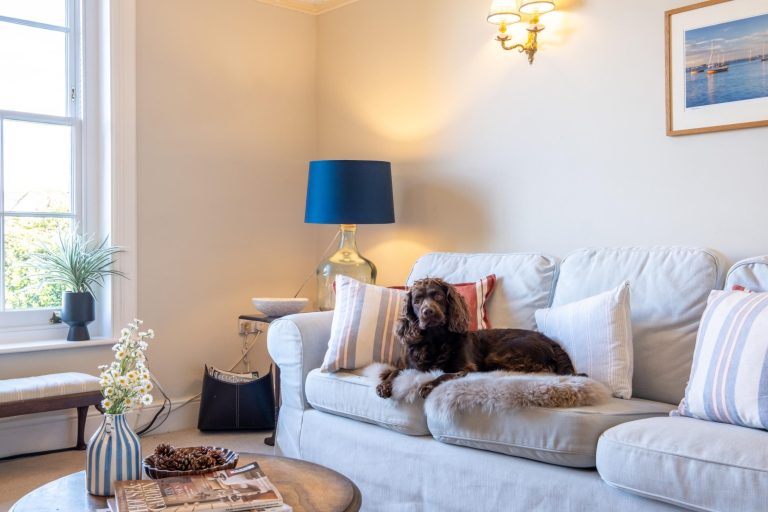
For those travelling with dogs, outdoor space takes on a different set of priorities. A secure boundary matters more than square footage. Shade, a hardwearing lawn, and easy access to water are the details that make a garden genuinely usable rather than just permitted.
Several homes in the collection are dog-friendly, with outdoor spaces designed with exactly this in mind — and many sit within easy reach of the island’s coastal paths and beaches. Browse the dog-friendly collection to find the right fit.
Conclusion
Outdoor space is rarely what draws someone to a holiday home in the first instance. It tends to be the thing they talk about afterwards: the terrace they ate every meal on, the garden they didn’t expect to spend quite so much time in, the view that turned out to be the reason the week felt different to most.
On the Isle of Wight, the combination of considered properties and a landscape that does a great deal of the work creates conditions that are difficult to find elsewhere. The island rewards the kind of stay where the days are unscheduled and the outside is as much a part of the experience as anything within four walls.
Browse the full collection to find the right property for your stay.
Frequently Asked Questions
Which Isle of Wight locations are best for sea-view holiday cottages with swimming pools?
The most sought-after combination — a private pool with a meaningful sea view — tends to be found on the higher ground above the eastern and southern coastlines, where the elevation creates the sightlines that lower-lying properties cannot offer. Aspect matters as much as location. A pool that looks out over open water rather than a neighbouring roofline changes the experience entirely. Browse the collection to see current availability.
What defines a considered outdoor space compared to a standard garden or terrace?
The difference lies in whether the space has been designed or simply finished. A considered outdoor space has been planned for aspect, shelter, privacy, and the way it will actually be used across the day: from the first cup of coffee in the morning to the last hour of evening light. The furniture invites you to stay. The sightlines have been thought about. The transition between inside and out feels easy rather than abrupt. These are not decorative details. They are what determine whether an outdoor space becomes a genuine part of the stay or remains incidental to it.
Are all outdoor spaces at Isle of Wight holiday homes suitable for dogs and children?
Not all gardens are equal in this regard, and it is worth checking carefully. The key things to look for are secure boundaries, a hardwearing lawn, and shade for warmer days. Our dog-friendly collection has been selected with these considerations in mind. Each property has been assessed for what it actually offers rather than simply whether pets are permitted.