


Is a Hot Tub Worth It for Your Isle of Wight Holiday Let?
A private hot tub is one of the most powerful revenue upgrades an Isle of Wight holiday let owner can make, but getting it right means understanding the legal landscape as well as the commercial one. This guide covers everything: the investment case, UK compliance requirements, the best brands and models, running costs, and how a professionally managed changeover service removes the burden from you entirely.
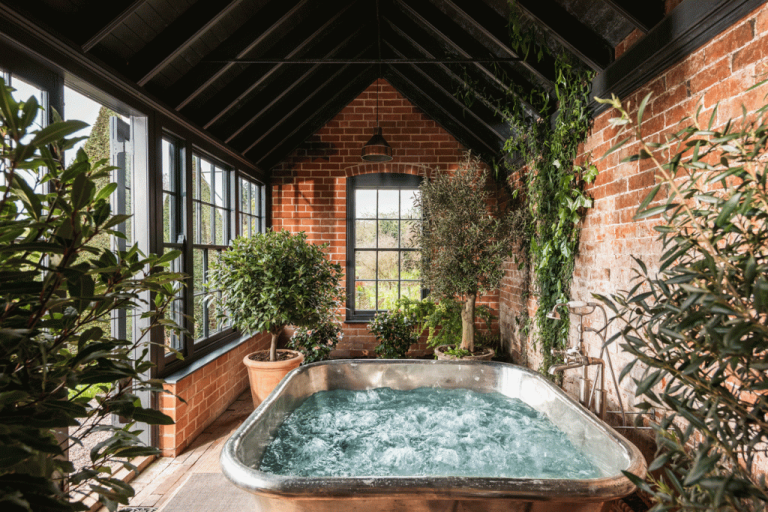
Photo Credit: William Holland – copper outdoor spa bath
Contents
- The investment case
- UK legislation explained
- What HSG282 actually requires
- The best brands and models
- Installation best practice
- Ongoing maintenance and the changeover challenge
- Energy efficiency and running costs
- Our professional managed changeover service
01 The investment case for a hot tub on the Isle of Wight
The Isle of Wight has long attracted visitors seeking coastal escapes, island tranquillity and the kind of unhurried pace that mainland life rarely allows. What has changed dramatically in recent years is what those guests now expect when they arrive at a self-catering property. A private hot tub has shifted from luxury addition to near-standard expectation at the premium end of the market, and it is now one of the most searched filters across all major holiday letting platforms.
Properties with a private hot tub typically achieve 20 to 40% higher nightly rates than comparable properties without one. More significantly, hot tub properties see markedly better occupancy in shoulder and off-peak seasons, precisely the months that often determine whether a holiday let turns a meaningful profit. The Isle of Wight’s year-round appeal, from coastal walks and cycling routes to the island’s arts and music scene, makes it particularly well-suited to year-round letting. A hot tub turns a summer-only asset into a twelve-month income stream.
Industry data consistently supports a return on hot tub investment within 12 to 18 months for well-managed Isle of Wight properties, and often considerably faster for high-occupancy lets. That said, the commercial opportunity comes with commercial responsibility. Offering a hot tub to paying guests in the UK is a regulated activity, and understanding the legal framework is the foundation of everything else.



02 The legal framework: what every owner must know
The primary piece of guidance governing hot tubs in commercial settings is HSG282: The Control of Legionella and Other Infectious Agents in Spa-Pool Systems, published by the UK Health and Safety Executive (HSE) in 2017. HSG282 fundamentally changed expectations for any commercial hot tub operation, and it applies to holiday lets of all sizes, including single-property owners.
While HSG282 is guidance rather than statute, it carries significant legal weight. Courts treat it as the benchmark against which a property owner’s duty of care is assessed. In the event of a guest illness or incident, non-compliance with HSG282 would very likely constitute a breach of duty under the Health and Safety at Work Act 1974.
Why Legionella is the primary concern
Hot tubs operating between 30°C and 40°C create near-ideal conditions for Legionella bacteria — the pathogen responsible for Legionnaires’ disease, a severe and potentially fatal form of pneumonia. Beyond Legionella, inadequately maintained hot tubs can harbour a range of pathogens causing skin infections, ear infections and gastrointestinal illness. Risks are significantly elevated for elderly guests, those who are pregnant, or those with certain underlying health conditions.
The wider legislative framework
- Health and Safety at Work Act 1974 — places a duty of care on those who provide facilities to the public
- Management of Health and Safety at Work Regulations 1999 — requires formal risk assessments to be carried out and documented
- COSHH Regulations 2002 — governs the safe storage and use of hot tub chemicals
- Water Supply (Water Fittings) Regulations 1999 — covers connection to the mains supply and prevention of backflow contamination
- Electricity at Work Regulations 1989 — all electrical installations must be safe and certified
- Occupiers’ Liability Act 1957/1984 — underpins guests’ rights and owner liability in the event of injury
Isle of Wight-specific considerations
Parts of the island within the Area of Outstanding Natural Beauty (AONB) may have additional planning considerations. Always check with Isle of Wight Council’s Planning Department before installing a hot tub at a property in a conservation area or near a listed building. Most portable hot tubs do not require planning permission, but permanent structures may require consent if they exceed 30 square metres or sit within a restricted zone.
On drainage: hot tub water must never be discharged to natural watercourses or near designated nature reserves. Use a designated drain or soakaway. Isle of Wight Council’s Environmental Health team has powers to inspect commercial holiday accommodation.
03 What HSG282 compliance actually requires
Understanding the practical requirements of HSG282 is essential before purchasing any hot tub for commercial use. A standard domestic hot tub will frequently fail to meet these requirements, which is why purchasing from a BISHTA-registered dealer who can confirm compliance in writing is so important.
Hardware requirements
An HSG282-compliant hot tub must have:
- Dedicated filtration system capable of adequately filtering the full water volume
- Inline constant chemical dosing system using bromine or chlorine, maintaining disinfectant levels continuously between manual checks
- No non-isolatable features — decorative water features or air blowers that cannot be fully isolated create stagnant areas in pipework where bacteria can proliferate
- Accessible insulation — full-foam insulation that prevents access to pipework and components is not HSG282 compliant. All parts must be accessible for inspection, maintenance and cleaning
- Fast-drain valve for efficient water changes between guest stays
- Lockable or tamper-resistant controls restricting guest access to chemical and technical settings
- UV or ozone secondary disinfection (not mandatory but strongly recommended to reduce chemical demand)
Water testing and record keeping
HSG282 requires:
- Water chemistry testing at least twice daily during periods of use, pH (target range 7.0–7.6), disinfectant levels and Total Dissolved Solids (TDS)
- All readings recorded in a written log, retained for a minimum of five years
- Water changes between different bathing groups, weekly as an absolute maximum, with best practice being a full change between every guest stay
- Regular UKAS-accredited microbiological testing, monthly for ACC, coliforms, E. coli and Pseudomonas aeruginosa; quarterly for Legionella
Compliance schedule at a glance
| Frequency | Required action |
|---|---|
| Twice daily (when in use). | Test and record pH, disinfectant levels (chlorine/bromine) and TDS |
| Between guest stays | Full drain, clean, refill, chemical dose, test and document (best practice) |
| Monthly | UKAS microbiological test: ACC, coliforms, E. coli, Pseudomonas aeruginosa |
| Quarterly | UKAS Legionella microbiological test; review water treatment log records |
| Every 6 months | Full professional service inspection; biofilm pipe flush |
| Annually | Review and update formal risk assessment; full compliance audit |
Guest information requirements
Clear written instructions must be provided to every set of guests and displayed as signage near the tub. These must include: the maximum water temperature (40°C), a requirement to shower before entry, age restrictions (no children under 5; under-12s supervised at all times), recommended maximum soak times of 15 to 20 minutes, and the NHS recommendation that pregnant guests avoid hot tub use entirely.

04 The best hot tub brands for Isle of Wight holiday lets
Choosing the right hot tub for a holiday let is fundamentally different from choosing one for home use. Energy efficiency is especially important given island energy costs, and durability for multi-occupancy use is non-negotiable. Every brand below has been selected on the basis of HSG282 compliance, quality, commercial suitability and value over the lifetime of ownership. Always purchase from a BISHTA-registered dealer and obtain written confirmation of HSG282 compliance before purchase.
Sunbeach Spas — Best all-round commercial choice
UK-designed specifically for the commercial holiday let and holiday park market. Their SmartSpa™ R10 PLUS insulation has won the UK Pool and Spa Awards Energy Efficient Gold Standard. The SB415R (6-person, plug-and-play on 13/20-amp) and the SB415R PRO (32-amp, higher specification) are the standout models for most Isle of Wight properties.
Equinox Spas — Contemporary compliance
Built from the ground up for the UK holiday let market. HSG282 compliant as standard, with fast-drain systems, simplified controls and contemporary styling that suits a wide range of property types.
Hot Spring® — Premium performance
The world’s largest hot tub manufacturer. Exceptional energy efficiency, averaging around 6 kWh per 24 hours to maintain temperature. Ideal for luxury lets where guests expect top-tier quality. Higher upfront cost is offset by lower lifetime running costs.
Jacuzzi® — Recognised luxury brand
Unparalleled guest recognition and strong booking appeal. The J-300 and J-400 series are widely used in upscale UK holiday accommodation. Confirm HSG282 compliance configuration with your dealer before purchase.
Superior Spas — British-made, plug-and-play
The Vacation Social, a 7-person HSG282-compliant model running on 13-amp, is an excellent choice for larger lets or owners who want the simplicity of plug-and-play installation without compromising on compliance.
Rexener — Off-grid and glamping properties
Finnish-made wood-burning and diesel models, popular at glamping and eco-accommodation sites. HSG282-compliant models feature sand filtration and UV systems. The Rexener Polar heats from cold to 37°C in approximately two hours, particularly practical on tight changeover days at rural Isle of Wight properties.
05 Installation: getting the siting right
Where and how you position your hot tub will directly affect guest satisfaction, your energy bills and your ability to maintain compliance efficiently. On the Isle of Wight, a few factors make thoughtful siting especially important.
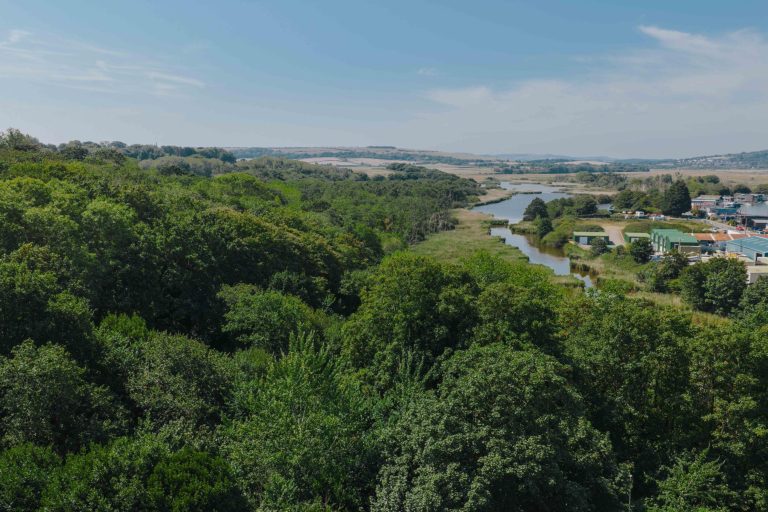
- Views: The island’s coastal and downland panoramas are a significant selling point. Position the tub to make the most of the outlook, this will feature in your listing photography and guest reviews.
- Shelter from south-westerly winds: The prevailing winds on the Isle of Wight can significantly increase heat loss. A sheltered position, against a wall, in a courtyard or beneath a purpose-built gazebo, reduces running costs and makes year-round use genuinely pleasant for guests.
- Privacy screening: Pergolas, timber panels or mature planting create the sense of seclusion that guests expect from a premium property. Particularly important in village locations or properties with near neighbours.
- Base preparation: A filled 6-person hot tub with occupants can weigh over 2,500kg. A reinforced concrete slab or engineered decking base is essential, a standard deck is not sufficient without structural assessment.
- Electrical installation: All work must be carried out by a qualified electrician to BS 7671 (IET Wiring Regulations). 32-amp models require a dedicated circuit from the consumer unit. Obtain and retain an Electrical Installation Certificate.
- Drainage: Ensure a suitable drain is within reach. Hot tub water must not be discharged to natural watercourses — use a designated drain or soakaway.
06 Ongoing maintenance and the changeover challenge
The changeover between guests is the most operationally intensive aspect of managing a holiday let hot tub, and the point at which compliance is most often compromised. A proper HSG282-compliant changeover is not simply a rinse and refill. It is a ten-step process that, done correctly, takes time, training and the right equipment.
The full changeover protocol
- Add a shock dose (oxidiser/superchlorination) before or immediately after the last guests depart. Run jets to circulate.
- Run the filtration system on a full cycle to pass the dosed water through the filter media.
- Fully drain the tub via the quick dump valve. Partial water changes are not sufficient between guest groups.
- Clean the shell thoroughly — waterline, jet surrounds and footwell are the critical areas.
- Clean or replace the filters. Filter condition directly affects water quality and must be checked at every changeover.
- Refill using mains water. A pre-heated supply significantly reduces reheat time on tight changeover days.
- Add appropriate chemicals, following COSHH guidelines. All chemicals must be stored in a locked, secure location away from guests.
- Test the water and record pH, disinfectant levels and TDS before guests arrive.
- Confirm the tub is at the correct temperature — 37 to 38°C is recommended for guest comfort.
- Replace the thermal cover and complete the written water treatment log entry.
Every one of these steps must be documented. In the event of a guest health complaint or a regulatory inspection, your water treatment log is your primary evidence of compliance.
07 Energy efficiency and running costs
Energy efficiency matters more on the Isle of Wight than on the mainland. Island energy infrastructure means costs can run marginally higher, and the return on a well-insulated, energy-efficient hot tub versus a budget model compounds significantly over time.
A quality, well-insulated hot tub from a reputable commercial brand typically costs £1.00 to £1.70 per day to maintain temperature when not in use. A poorly insulated budget tub can cost two to three times as much. The upfront price difference between a budget model and a quality commercial-grade tub is routinely recovered within 18 to 24 months through lower running costs alone, before accounting for reliability and compliance advantages.
Air source heat pumps — the smart upgrade
Adding an air source heat pump (ASHP) to your hot tub’s heating system is one of the highest-return upgrades available. Rather than converting electricity directly to heat at a 1:1 ratio, a modern inverter ASHP extracts heat from the ambient air, achieving real-world Coefficients of Performance (COP) of around 4 in average UK conditions, meaning roughly four units of heat produced per unit of electricity consumed. Industry evidence points to running cost reductions of 50 to 65% compared to standard electric heating.
Estimated annual running costs
| Scenario | Estimated annual cost |
|---|---|
| Well-insulated 6-person tub, standard electric heater. | £400–£600 |
| Well-insulated 6-person tub with ASHP integration | £120–£200 |
| Budget or poorly insulated tub (not recommended) | £900–£1,500+ |
| Chemicals (chlorine/bromine), depending on usage | £200–£350 |
| Professional servicing and maintenance | £500–£1,200 |
All figures are estimates. Actual costs depend on usage, energy tariff and local conditions.
08 Our professional hot tub changeover service
Managing HSG282 compliance yourself is entirely possible, but it demands consistent time, training and attention on every changeover day, every testing visit and every microbiological testing cycle. For many Isle of Wight property owners, particularly those who do not live on the island or who manage multiple properties, a fully managed professional service is both the more practical and the more legally secure option.
As an Isle of Wight holiday letting agency with specialist expertise in hot tub compliance, we offer a fully managed changeover and maintenance service designed specifically around the demands of commercial holiday let operation.
What our managed service includes
- Fully HSG282-compliant changeovers carried out by trained, qualified operatives at every guest handover
- Written water treatment records provided after every visit, giving you the documented evidence required under HSG282
- Flexible scheduling aligned to your arrival and departure times, so the tub is always ready and at the correct temperature when guests arrive
- Routine testing visits during longer guest stays to maintain the twice-daily testing requirement
- Emergency call-out cover during the letting season
- Quarterly deep clean and pipe flush to maintain the biofilm control requirements of HSG282
- Annual risk assessment review to keep your documentation current and compliant
- Coordination of UKAS microbiological testing — we arrange it, interpret the results and flag any actions required
Taking advantage of a professional managed service removes the compliance burden from you as the property owner and gives you and your guests complete peace of mind. Whether you are installing a hot tub for the first time or reviewing the management of an existing one, we would be delighted to discuss how our service works in practice.
Get in touch to arrange a no-obligation conversation with our team.
Useful resources
- HSE (Health and Safety Executive): www.hse.gov.uk, download HSG282 free of charge
- BISHTA (British and Irish Spa and Hot Tub Association): www.bishta.co.uk, use their dealer finder to locate registered suppliers
- Isle of Wight Council: www.iow.gov.uk, for planning queries and Environmental Health contact
- UKAS (United Kingdom Accreditation Service): www.ukas.com, find accredited laboratories for microbiological water testing
Disclaimer: This guide represents a summary of best practice at the time of publication (March 2026). Legislation, guidance and best practice can change. Always verify current requirements with the HSE, your local authority and qualified technical advisors. This article does not constitute legal, financial or technical advice.